Monday, September 26, 2011

What we mean by "Sustainably Harvested".

Harvesting:

We recently struck Appalachian gold! We were turned on to a huge black walnut tree located on the perimeter of a forest property in Burnsville, NC. (Picture # 1) The property owner informed us that the tree had not leafed out in 3-4 years and it was showing signs of age. A tree in this condition is a gamble, it can be either woodworkers gold, or simply rot not even good enough for firewood. The tree was obviously dead and it was running the risk of damaging the property owners fence, there was no question in our minds about cutting this tree down so we called on the help of Shafer Tree Care. Brain Shafer of Shafer Tree Care is a quality minded Arborist and certified by the ISA. He makes sure that every bit of tree that has to be removed due to age or damage is saved from the landfill and recycled by putting it to good use for lumber, mulch, or firewood. When the tree was felled only about a half of an inch off Brians bulls eye I was AMAZED! No other trees were damaged in the process. I imediatly ran to the tree to see if the gamble paid off and YES! 100% solid wood, with beautiful grain, and just a 1/4" of sapwood surrounding the perimiter of the tree which is commonly about 1-2". The tree was more than I ever could have expected it to be and we transported it directly to the saw mill.

Milling:

We traveled north from our shop in Asheville to Billy Rice's saw mill in Mars Hill, NC. Billy Rice is known all over western NC. for his ability to read a tree and make the best possible use of it for lumber. High on a cleared mountain top lot I pulled down his long gravel driveway only to meet his two Australian Cattle Dog puppies (Picture # 2). My wife Amy and I have a 3 year old Australlian Cattle dog which we love to death so needles to say I played in a puppy pile for about 30 minutes. After being nibbled on by puppies we decided it was time to mill the walnut logs. Billy set up his "Woodmizer" which is a portable saw mill capable of milling 26" diameter logs ( Picture # 3) and our log was going to use every bit of that. We milled the first log( the butt log). The deeper into the tree we cut the more beautiful the grain was! The first log was filled with clean straight grain and rich nut brown tones as walnut is known for. The second log was the next 10' long section of tree above the "butt" log. The second log has a "crotch" section which is where the tree trunk branches out into two. As we milled this log we completely forgot the first log existed and our jaws dropped further and further as we milled deeper into the tree. The "crotch" section displayed the most figured and characteristic grain I have seen in a long time ( picture #5). "Crotch" grain is commonly used in gun stocks, veneered drawer fronts, Book-matched panels and table tops. It is truley natures work of art. When all the logs were milled the lumber was transported to our lumber storage building to dry.

Drying:

The drying process is one of the most important. The wood can cup, crown, twist, crack, and it is important to be meticulous about stacking and storing. We stack each board on top of another and space them with 3/4" sticks to maximize air flow inside our ventailated building ( Picture # 4). The boards are 2" thick and we have to wait a full year before they reach a 20-30% moisture content. After a years time if the moisture content of each board is between 20-30% we load them into a solar kiln to bring the moisture down to 6-7% which is standard for interior furniture, cabinets, hardwood floors, and trim. A solar kiln works with the sun like a green house, the kiln has a clear glass top angled towards the sun which collects heat and warms the kiln to 100-110 degrees. To keep dry air circulating and remove the moisture a fan is installed at the top of the kiln blowing towards the glass roof and circulated the dry hot air through the lumber pile. A small vent at the bottom removes any unwanted cool moist air when the top fan is running. Other than completely air drying lumber for 10-15 years this is the most efficent suatainable way to dry lumber.

In a years time we plan to have these once in a lifetime boards on display for customers to pic from and have made into custom furniture. We are working on a showroom space right now so stay tuned for more info.

Thanks for reading and enjoy the picture's.

#1

#2

#3

#4

#5

Wednesday, September 21, 2011

Jumping on the Google + bandwagon.


To keep up with the rest of the world we decided to join Google +. If you have Google plus and want to follow us here is the link https://plus.google.com/115171169320519029650/posts

Thanks,
Chester Shuey

Wednesday, September 14, 2011

Selected work: English walnut dining table.

We recently delivered a "Harmony" dining table to a local couple in north Asheville. The top is made with two wildly grained English walnut boards, book-matched and salvaged from western Maryland. The base is made with gorgeous black walnut. We will be building two "grace" high back chairs for the end of the table, and four "New hope" chairs with locally salvaged black walnut and hickory to fill in the sides to complete the dining set.

Not such a great picture but enjoy!

Tuesday, September 13, 2011

Selected work of the week: Chef's Board

This custom 36" x 36" chef's board is made from salvaged Appalachian black walnut which was locally harvested of course. The joined walnut work surface beautifully blends the rich dark heartwood and creamy sapwood while providing a flat 36" x 36" work surface. We added bread boards on the ends to stabilize any movement, and a lip on the inside edge which keeps the board from sliding around while in use.

Thanks to our customer we were able to provide pictures below. Enjoy!


More boards available for purchase on our Appalachian Joinery etsy shop listed here: http://www.etsy.com/shop/AppalachianJoinery?ref=pr_shop_more

Saturday, August 27, 2011

Free shipping special!

Receive free shipping within the U.S.A. at our etsy shop until Labor Day by using the coupon code "laborday2011". Hurry to get first picks on out new inventory of unique boards!


Friday, August 19, 2011

Selected work of the week: Dovetail joinery of epic proportions.


Recently we had the opportunity to work on a one of a kind custom bench. The bench was made from wormy chestnut that dates back 200+ years. The wormy chestnut was salvaged from a stock/tobacco barn in Madison county N.C. built just before the civil war. The building was constructed using these beams and old fashioned dovetail joinery. We thought that using this same joinery technique to construct this bench would not only be the strongest and cleanest looking design, but it would respect the craftsman who originally hand hewn the logs and hand cut the dovetail joints for the building. Dovetailed corners on an building never needed to be fastened in any way due to the the angle of the dovetail and gravity constantly pulling down on the beams which naturally pulls the corner tight. We maintained that same level of craftsmanship on our bench.

May these 200+ year old wormy chestnut beams live another 200+ years in the form of a bench!

Enjoy the pictures!


Tuesday, August 16, 2011

The Facebook fan cutting board giveaway!


Ok, here is how to play. Seach our Appalachian Joinery Etsy shop for a cutting board with the word "facebook" listed as one of the "tags". Once you have found that board, post the listing # of that board on our Chester Shuey Handcrafted Facebook page and you win. The board will be mailed to you with free shipping in 3-4 days. Good luck everyone!

Here's or etsy shop url: http://www.etsy.com/shop/AppalachianJoinery?ref=pr_shop_more

Sunday, August 14, 2011

New salvaged Appalachian serving and cutting boards!


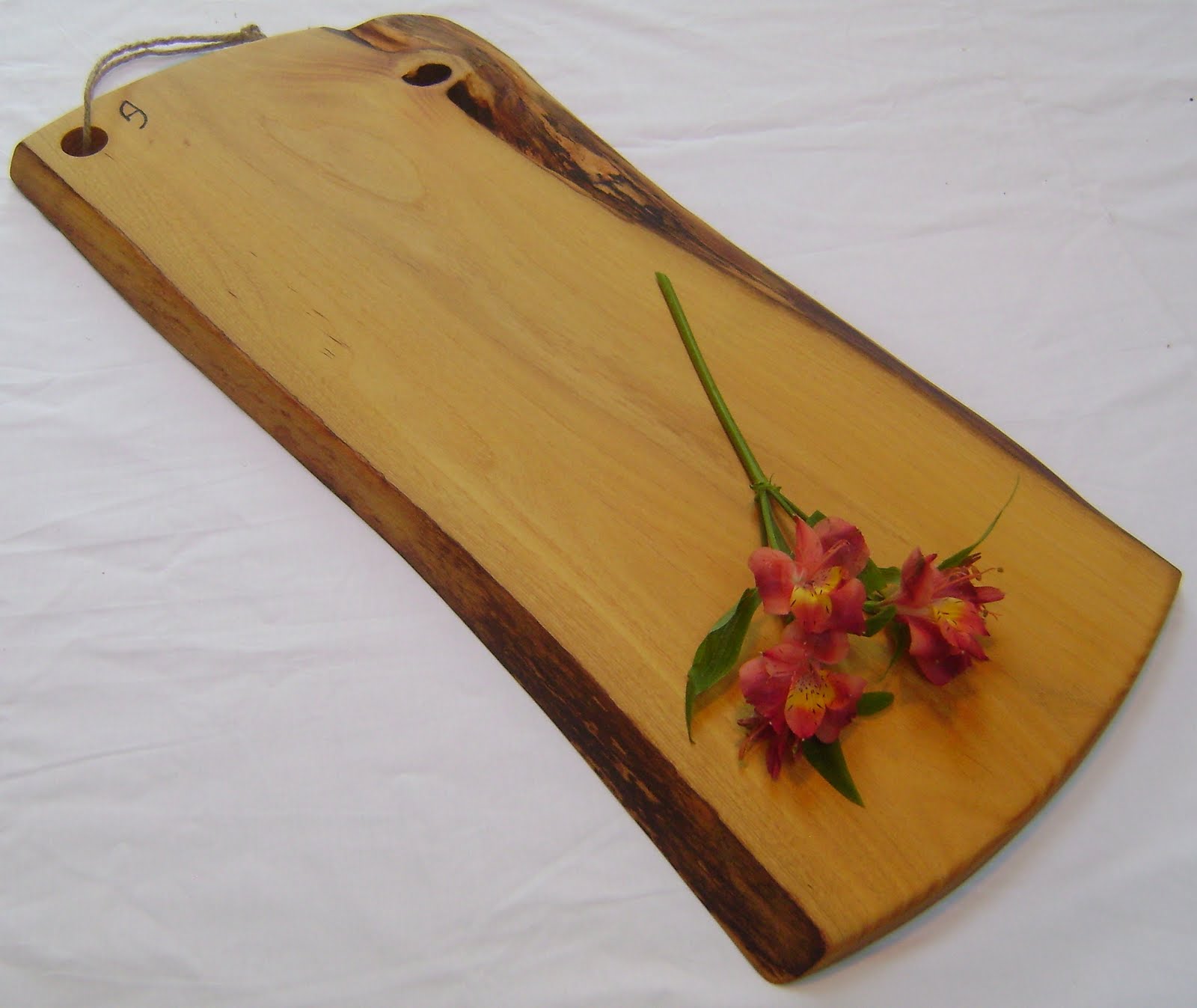
The new inventory includes three beautiful Appalachian hardwood species. First, a few gorgeous honey locust boards made from a storm felled tree from a mountain top property north of Asheville, NC. Honey locust is a very hard, very stable wood and was traditionally used for outdoor structures because it is highly rot resistant and naturally stands up to water. Second, beautiful box elder boards we made from a tree that was felled by a tree service on a residential property in Barnardsville, NC. Box elder is used primarily for accent furniture due to its mesmerizing figure and unique red-streaked grain. Last but not least, our classic Appalachian black walnut boards are back! The black walnut tree was felled by a local tree service here in Asheville, NC and stored in a cabinet shop for 10 years. Black walnut is prized for furniture making due to its beautiful chocolate and nut brown color. All of the wood we use for our boards is air dried for at least one year and then kiln dried for two weeks to eliminate warping and unwanted moisture. I hope these trees will have a great second life!

Enjoy the pictures and to see more of these boards look for them very soon this week on our Etsy shop.


Wednesday, June 22, 2011

The very last of our gorgeous salvaged english walnut supply is on etsy.

About 2 years ago we are able to salvage a huge english walnut tree that was damaged in a storm. Ever since then we have been making custom furniture from the main log, cutting/serving boards from the limbs, and anything too small to work with was put in the shop wood stove for to keep us warm in the winter. It was truly a please to work with this beautiful and hard wood. We were glad repurposed this tree into functional and beautiful objects that have been shipped all over the world to people that share a passion for earth conscious handmade items.

Here are some of the great things our customers have said -
http://www.etsy.com/people/AppalachianJoinery/feedback?ref=pr_feedback

Here are a few pictures of the very last of this tree-


You can see more boards here-
http://www.etsy.com/shop/AppalachianJoinery?ref=pr_shop_more

Saturday, June 18, 2011

New boards!!

Flamed red birch from the Biltmore estate grounds and gorgeous figured wild black cherry!